
French Polynesia Strengthens World’s Largest Network of Fully Protected Marine Areas
New safeguards will bring full protection to 30% of the islands’ ocean, advancing the global ‘30 by 30’ goal
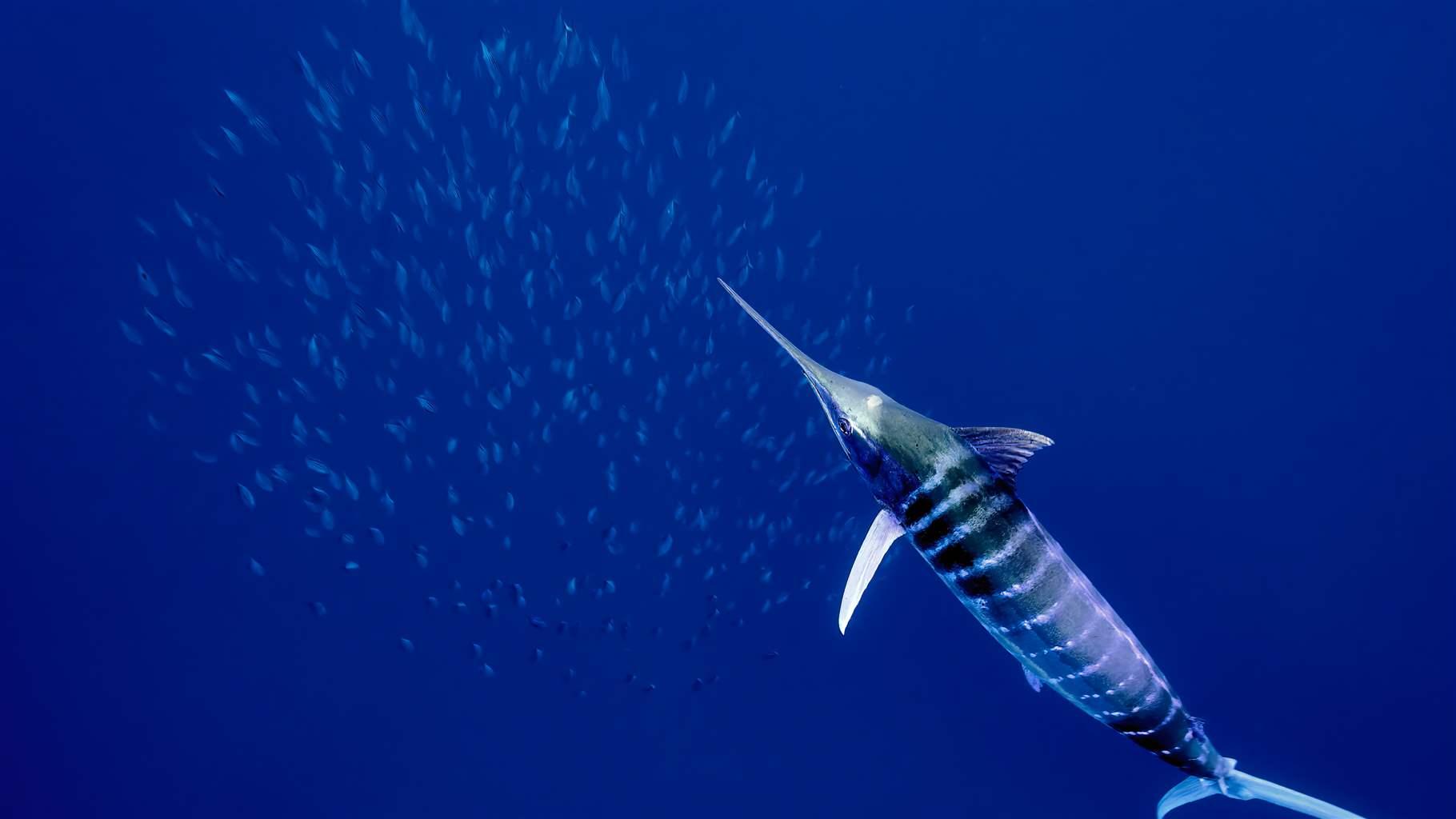
PAPEETE, French Polynesia—Pew Bertarelli Ocean Legacy today celebrated French Polynesia President Moetai Brotherson’s announcement that French Polynesia will fully protect about 520,000 square kilometers (200,000 square miles) of ocean near the Austral, Marquesas, and Western Society islands. The move will strengthen the world’s largest network of fully protected marine areas within an exclusive economic zone (EEZ).
Once the protections are implemented, 30% of French Polynesia’s waters—about 1.4 million square kilometers (540,500 square miles) in total, an area more than twice the size of continental France—will be protected from all extractive activities, and other human uses will be limited. This effort will serve as a model for large-scale ocean conservation rooted in local leadership and traditional stewardship while helping to meet the global goal of protecting at least 30% of the ocean by 2030 (known as “30 by 30”). This milestone builds on more than a decade of work led by Polynesian communities and local leaders and was supported by partner organizations. French Polynesia’s waters are home to exceptional marine biodiversity—including seabirds, sharks, whales, and species found nowhere else on Earth—and serve as important migration routes and breeding grounds for marine life.
The expansion follows the 2025 establishment of the Tainui Atea marine protected area, which spans the nearly 5 million-square-kilometer (2 million-square-mile) EEZ, and President Brotherson’s commitments to increase the amount of fully protected waters reflects strong public support, with communities across the Austral and Marquesas islands playing a central role in shaping the protections.
Last year, French Polynesia fully protected a total of approximately 900,000 square kilometers (about 350,000 square miles) around the Gambier and Society islands and created artisanal fishing zones—collectively covering 190,000 square kilometers (73,000 square miles)—that extend 15 nautical miles from the Austral, Marquesas, and Gambier islands and 30 nautical miles from the Society Islands. Fishing in these zones is limited to single pole-and-line catch from boats less than 12 meters (39 feet) in length, allowing local people to continue fishing in traditional ways that sustain their community.
The newly announced fully protected areas will safeguard 373,841 square kilometers (144,340 square miles) around the Austral Islands, nearly 129,412 square kilometers (49,966 square miles) near the Marquesas Islands, and about 16,083 square kilometers (6,209 square miles) of remote waters near the Western Society Islands. Also, more than 8,000 square kilometers (3,088 square miles) of artisanal fishing zones will be added in the waters surrounding the Austral Islands, and nearly 19,000 square kilometers (7,336 square miles) of waters will be added around the Marquesas, covering coastal areas and nearby seamounts.
For more than a decade, Pew Bertarelli Ocean Legacy has worked in partnership with the government of French Polynesia, scientists, fishers, and local organizations to support community-driven efforts to conserve marine ecosystems. In the Austral and Marquesas islands, that work has included dozens of scientific, economic, and sociocultural studies; scientific and cultural expeditions; and hundreds of public meetings and consultations, along with documentary films and other materials that bring this knowledge back to communities and the wider public.
The implementation of marine protections will be supported by the Te Moana Collective, a coalition that Pew Bertarelli Ocean Legacy helped to establish and is an active member of, alongside the Becht Foundation, Bezos Earth Fund, Bloomberg Ocean Fund, Blue Marine Foundation, Blue Nature Alliance, Oceans 5, and the Wyss Foundation. These international philanthropic partners work with the government and local communities to support the establishment of long-term financing mechanisms, along with governance, scientific monitoring, and the capacities needed for the effective management of the marine protected areas.
Taivini Teai, French Polynesia’s minister of agriculture, marine resources, and environment, said: “This announcement reflects French Polynesia’s commitment to protecting our ocean for future generations while supporting the communities that depend on it. By combining large-scale conservation, traditional stewardship, and sustainable use, we aim to lead by example and demonstrate that ambitious ocean protection and local livelihoods can go hand in hand.”
Artigas Hatitio, mayor of Rimatara in the Austral Islands, said: “We have been working on the Rahui Nui no Tuhaa Pae Marine Protected Area project for 12 years—an extension of our traditional rāhui to offshore areas. This is a significant step forward for our Austral Islands and for all of French Polynesia.”
Joseph Kaiha, mayor of Ua Pou in the Marquesas Islands, said: “Following the designation of the Marquesas Islands as a UNESCO World Heritage Site, the establishment of the Te Tai Nui a Hau Marine Protected Area is a recognition of the natural and cultural heritage of our islands.”
Dona Bertarelli, philanthropist and patron of nature for the International Union for Conservation of Nature, said: “French Polynesia continues to demonstrate what ambitious ocean conservation looks like in practice. By working alongside local partners and returning regularly to these islands for more than a decade, I have seen the deep commitment and community leadership behind this extraordinary achievement. Pew Bertarelli Ocean Legacy is proud to have supported this work and remains committed to helping ensure that these protections deliver lasting benefits for people, biodiversity, and future generations.”
Tom Dillon, senior vice president of environment and crosscutting initiatives for The Pew Charitable Trusts, said: “By expanding fully protected marine areas across the Austral and Marquesas islands, French Polynesia is reinforcing its position as a global leader in ocean conservation. As I saw firsthand when meeting with President Brotherson and local leaders earlier this year, this announcement demonstrates that large-scale protections can be achieved through sustained political leadership, strong community engagement, and a clear long-term vision.”
Donatien Tanret, who leads Pew Bertarelli Ocean Legacy’s work in French Polynesia, said: “Communities across the Austral and Marquesas islands have spent years shaping a collective vision for conserving their ocean that reflects both their cultural traditions and their future needs. From the start, that vision included coastal protected zones around the islands and their seamounts, where artisanal fishing can continue for the local people who depend on it. This announcement is a powerful example of how local leadership and traditional approaches like the Polynesian conservation practice of rāhui can guide effective, durable conservation.”
Pew Bertarelli Ocean Legacy is a partnership between The Pew Charitable Trusts and Dona Bertarelli. Building on two decades of effort, they have worked with communities, governments, Indigenous groups, scientists, and other partners to support the establishment of the first generation of marine protected areas, conserving more than 17 million square kilometers (6.5 million square miles) of ocean, including about 90% of the world’s highly and fully protected waters.